Inside the Algorithms: How Predictive Models Shape Welcome Offers and Live Bet Adjustments in Soccer and Equine Events
Ines Günther · Aug 7, 2026
Inside the Algorithms: How Predictive Models Shape Welcome Offers and Live Bet Adjustments in Soccer and Equine Events
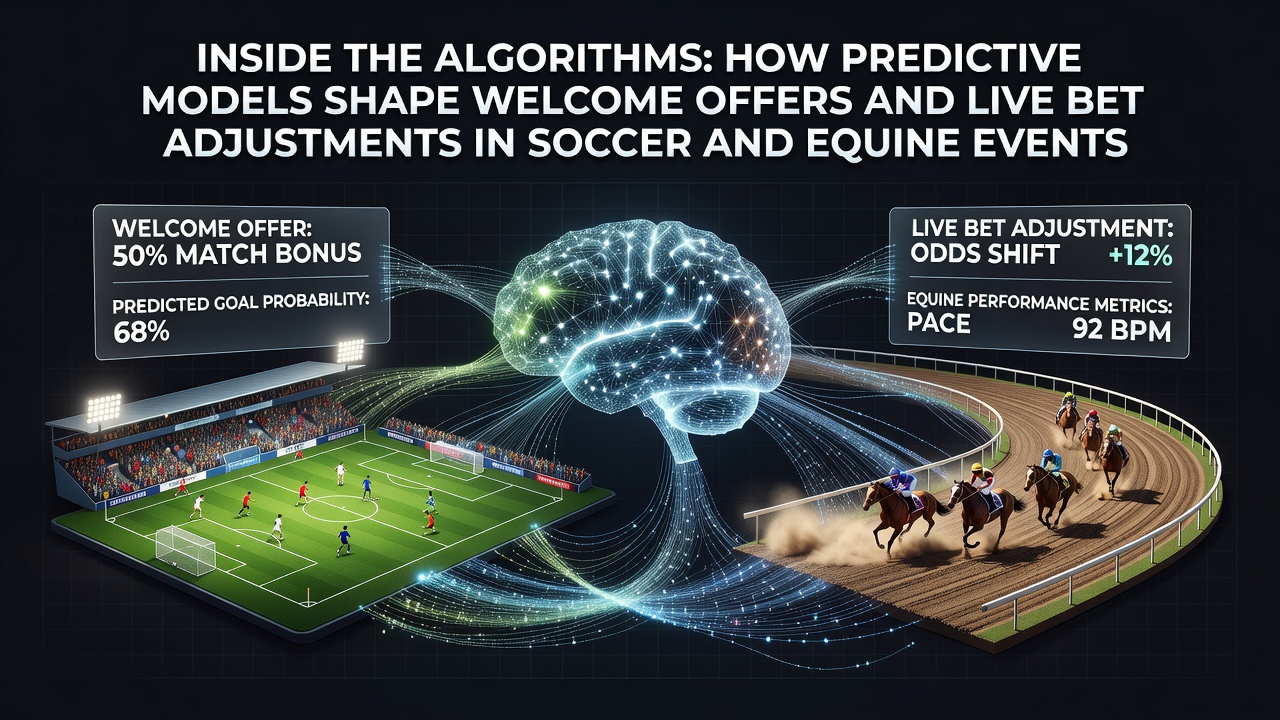
Predictive models sit at the core of how betting platforms determine welcome offers and adjust live odds during soccer matches along with equine events, drawing on vast datasets that include player statistics, historical race outcomes, and real-time inputs. These systems process information from multiple sources to generate personalized bonuses that reflect individual user patterns, while simultaneously recalibrating betting lines as events unfold on the field or track.
Core Mechanics Behind Predictive Modeling
Algorithms rely on machine learning techniques that analyze variables such as team form, weather conditions for races, and betting volume trends to forecast probabilities with increasing precision. Researchers at institutions like the Massachusetts Institute of Technology have examined how these models integrate regression analysis and neural networks to handle the complexity of live sports data, where thousands of data points update every second during a Premier League fixture or a thoroughbred race meeting.
Platforms apply these models first to segment new users based on registration details and initial deposit behavior, which then influences the structure of welcome packages that combine free bets, deposit matches, or enhanced odds tailored to soccer or horse racing preferences. Data from industry reports shows that such segmentation can increase retention rates because offers align closely with predicted user interests rather than generic promotions distributed uniformly across all accounts.
Welcome Offers Shaped by User Prediction
Welcome offers emerge from risk-assessment engines that evaluate deposit size, chosen sport, and geographic location to set bonus thresholds and wagering requirements. In practice, a new account focused on soccer might receive boosted accumulator odds on upcoming matches, whereas one indicating interest in equine events could see enhanced place terms for a major race day. These decisions stem from historical conversion data that models use to balance operator margins against user engagement metrics collected across thousands of similar profiles.
Studies from the University of Nevada, Las Vegas have documented how predictive scoring helps operators limit exposure on high-risk bonus structures while still attracting volume in competitive markets. The models update continuously as users interact with early promotions, allowing adjustments before the welcome period concludes and feeding insights into subsequent retention campaigns.
Live Bet Adjustments in Soccer Matches
During soccer events, live bet adjustments occur through models that ingest minute-by-minute inputs including possession statistics, expected goals calculations, and injury reports to shift odds on outcomes such as next goalscorer or match winner. These systems detect momentum shifts faster than manual traders could manage, resulting in dynamic pricing that reflects current probabilities rather than pre-match estimates alone. Observers note that soccer's fluid nature creates frequent recalibrations, especially after red cards or substitutions, where the algorithm weighs remaining time against historical comeback frequencies.

Equine events present different modeling challenges because race dynamics revolve around individual horse performance, pace maps, and track conditions that evolve less predictably once the gates open. Predictive engines here incorporate split times, jockey changes, and even post-position biases drawn from past meetings at the same venue. Adjustments happen rapidly between races and sometimes mid-race when betting remains open on certain exotic wagers, with models prioritizing variables like ground softness that affect multiple runners simultaneously.
Comparative Dynamics Across Event Types
Soccer models often emphasize team-level correlations and large sample sizes from league-wide data, whereas equine models lean on granular horse-specific histories that require more frequent retraining when new track surfaces or distance changes appear. Both categories benefit from ensemble methods that combine multiple algorithms to reduce variance, a technique highlighted in research published through the National Council on Problem Gambling archives. Platforms active in August 2026 continued refining these approaches as major soccer tournaments overlapped with peak summer racing festivals, creating higher data throughput for model validation.
Operators integrate external feeds from timing companies and official league data providers to maintain accuracy, ensuring that live adjustments reflect verified events rather than anomalies. This integration allows for rapid response to disruptions such as weather delays in horse racing or VAR interventions in soccer, both of which alter probability distributions that the models then translate into updated odds and stake limits.
Conclusion
Predictive models continue to drive personalization of welcome offers and precision in live adjustments across soccer and equine betting because they synthesize large-scale historical patterns with instantaneous inputs. The resulting systems deliver differentiated experiences that scale across global user bases while responding to the distinct statistical profiles of team sports versus individual animal competitions. As data sources expand and computational methods advance, these algorithms maintain their central position in shaping both initial engagement and ongoing market responsiveness.